
The Future of Data Privacy: How Solid is Revolutionizing the Web
Discover how Solid, a project by Tim Berners-Lee, is transforming online data privacy. Learn how decentralized data storage puts control back in users’ hands and what it means for the future of the internet.
 admin
admin

Introduction: The Privacy Problem on the Internet
In today's digital world, most personal data is controlled by big tech companies. Every time you sign up for a service, your information gets stored in centralized servers—often leaving it vulnerable to breaches, surveillance, and misuse.
But what if you could control your own data and decide who can access it?
That’s exactly what Solid aims to achieve. Created by Tim Berners-Lee, the inventor of the World Wide Web, Solid is a decentralized data storage system that returns power to individuals. Let’s dive into how this innovative approach is shaping the future of the internet.
What is Solid and How Does It Work?
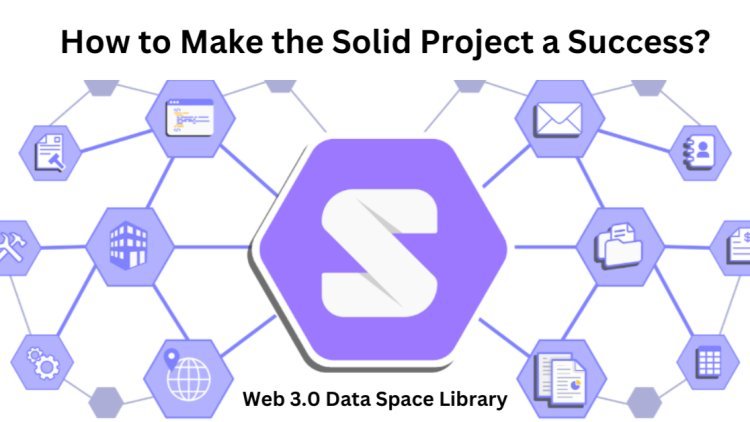
Solid (Social Linked Data) is an open-source framework that enables individuals to store their personal data in Pods (Personal Online Data Stores). Instead of relying on a company’s servers, users store their own data in locations they trust, whether it's their own devices, cloud services, or third-party providers.
???? Users control who accesses their data—no more companies selling your personal information.
???? One login for multiple services—no need to create different accounts for different platforms.
???? Apps access data without storing it—no need for companies to hoard user data.
Why Solid is a Game-Changer for Privacy & Security
✅ 1. Full Data Ownership & Control
With Solid, you decide who can see your data, for how long, and under what conditions. You own your digital identity.
✅ 2. No More Data Silos
Instead of companies locking in user data, apps can request permission to access information from your Solid Pod—but they don’t keep copies of it.
✅ 3. Enhanced Security & Reduced Breaches
Since data isn’t stored in one central server, hackers can’t target massive databases for breaches. This minimizes cybersecurity risks for both users and businesses.
✅ 4. Greater Transparency & Trust
Users can see exactly what data is shared with companies, ensuring ethical data practices. Businesses that adopt Solid-based privacy models will gain customer trust and competitive advantages.
The Future of the Internet with Solid
As data privacy regulations (like GDPR and CCPA) tighten, businesses will need to adapt to privacy-first models. Solid provides a scalable, ethical solution that benefits both users and organizations.
Industries That Can Benefit from Solid:
???? Social Media – Users keep control of their posts, messages, and profiles.
???? Healthcare – Patients manage access to their medical records securely.
???? E-Commerce – Shoppers control their purchasing history and preferences.
???? Education – Students and teachers securely store and share academic data.
Conclusion: A More Secure and Ethical Digital Future
Solid represents a paradigm shift in how data is stored and shared. By giving individuals control over their information, it reduces dependence on big tech and enhances security across industries.
???? The internet is evolving. Are you ready for a privacy-first web?
Call-to-Action (CTA): Get Involved!
???? Want to learn more about Solid? Visit the official website: Solid Project
???? Looking for privacy-focused digital solutions? Contact us today to explore how decentralized technologies can benefit your business!